
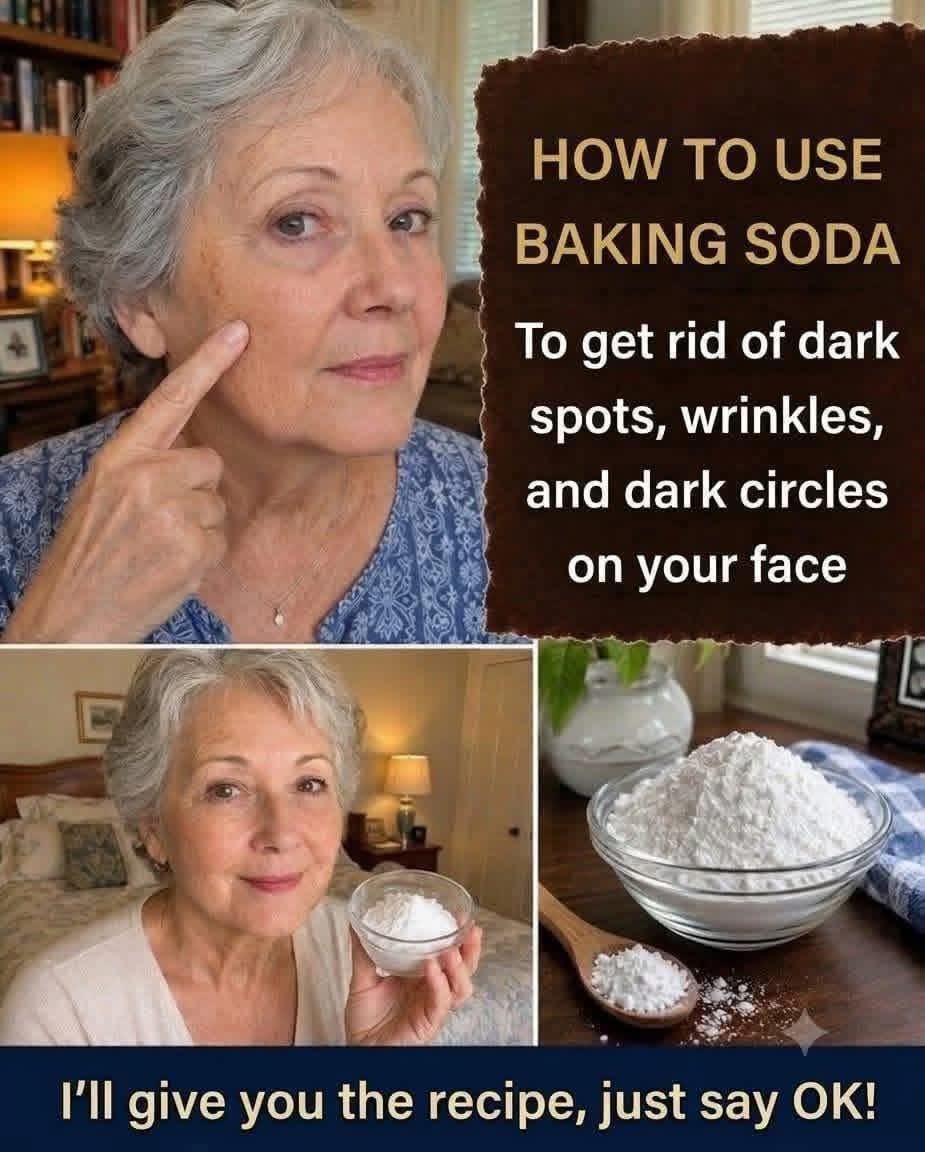
Dark stains and discoloration can be frustrating, especially when they appear on areas that are difficult to cover. Because baking soda is inexpensive and available in almost every kitchen, it has become a popular ingredient in homemade beauty remedies.
You may have seen recipes claiming that mixing baking soda with water, lemon juice, toothpaste, or other ingredients can quickly remove very dark stains from the skin.
But does it actually work?
The answer is more complicated than social-media posts often suggest.
Baking soda can help with certain types of surface stains, but it is not a proven treatment for pigmentation or dark spots on the skin. In fact, applying baking soda directly to your skin can sometimes cause dryness, irritation, or inflammation—and irritation may make pigmentation look even darker.
Let’s look at what baking soda can and cannot do, and what safer options you can consider.
What Is Baking Soda?
Baking soda, also called sodium bicarbonate, is a mildly alkaline powder commonly used for baking, cleaning, deodorizing, and household stain removal.
Its fine texture also gives it mild abrasive properties. This is one reason homemade beauty recipes sometimes recommend rubbing baking soda onto the skin.
However, the fact that something can remove a stain from a countertop does not mean it is appropriate for human skin.
Your skin has a natural protective barrier and a specific pH balance. Harsh or overly alkaline substances can interfere with that barrier.
Can Baking Soda Remove Dark Skin Stains?
It depends on what you mean by “stain.”
If you’re talking about surface discoloration, such as residue from certain products or substances sitting on the outermost layer of the skin, gentle cleansing may sometimes help.
But if you’re talking about hyperpigmentation, such as dark spots caused by acne, sun exposure, inflammation, hormones, or other skin conditions, baking soda is not a reliable treatment.
Hyperpigmentation develops because pigment is produced or deposited within the skin. Simply scrubbing the surface cannot safely erase it.
Why Baking Soda Became Popular for Dark Spots
Baking soda is often promoted online because it is:
- Cheap
- Easy to find
- Easy to mix
- Mildly abrasive
- Useful for many household cleaning tasks
This can make it seem like a natural solution for almost any type of discoloration.
But “natural” and “homemade” do not automatically mean “safe for skin.”
The concentration, frequency of use, and individual skin sensitivity all matter.
The Problem With Scrubbing Dark Spots
One of the biggest mistakes people make is aggressively scrubbing a dark area in an attempt to remove it faster.
Repeated friction can irritate the skin.
When the skin becomes irritated or inflamed, it can sometimes produce more pigment afterward. This can result in post-inflammatory hyperpigmentation, particularly in people whose skin tends to pigment easily.
So a routine that is supposed to make a dark spot lighter can potentially make it more noticeable.
Gentle skin care is usually a better approach than aggressive exfoliation.
What About Baking Soda and Lemon Juice?
This combination is especially common in homemade skincare recipes.
You may see claims that baking soda and lemon juice can “bleach” dark spots naturally.
However, this is not a combination I’d recommend applying to the skin.
Lemon juice can irritate skin, and citrus compounds can increase sensitivity to sunlight. Combining it with an abrasive or alkaline ingredient such as baking soda can make irritation more likely.
If the goal is to fade pigmentation, there are much more appropriate ingredients specifically formulated for skin.
Safer Ingredients for Uneven Skin Tone
If you’re trying to improve the appearance of dark spots, consider products formulated with ingredients that have better evidence for treating hyperpigmentation.
Vitamin C
Topical vitamin C is commonly used in skincare to help brighten the appearance of uneven skin tone and protect against oxidative stress.
Different formulations vary considerably in stability and effectiveness, so a properly formulated skincare product is preferable to homemade mixtures.
Niacinamide
Niacinamide, a form of vitamin B3, is another popular skincare ingredient.
It can help improve the appearance of uneven pigmentation and is generally well tolerated by many people.
Azelaic Acid
Azelaic acid is particularly useful for people dealing with both acne-related concerns and uneven pigmentation.
It can help address inflammation and pigmentation at the same time.
Retinoids
Retinoids can increase skin-cell turnover and are sometimes used to treat pigmentation and other skin concerns.
They can also cause irritation, however, so they should be introduced gradually and used according to product directions or professional advice.
The Most Important Step: Sunscreen
If you’re trying to fade dark spots, sunscreen is one of the most important parts of the routine.
Sun exposure can make pigmentation darker and can make it harder for discoloration to fade.
A broad-spectrum sunscreen of SPF 30 or higher is commonly recommended for daily protection.
Apply it consistently to exposed skin, particularly when spending time outdoors.
Without sun protection, even an effective dark-spot routine may have difficulty producing good results.
A Simple Routine for Dark Spots
You don’t need a complicated routine.
Morning
1. Gentle cleanser
Clean the skin without aggressive scrubbing.
2. Brightening ingredient
Consider a well-formulated product containing ingredients such as vitamin C or niacinamide.
3. Moisturizer
Use a moisturizer appropriate for your skin type.
4. Sunscreen
Finish with broad-spectrum SPF 30 or higher.
Evening
1. Gentle cleansing
Remove sunscreen, makeup, and daily buildup.
2. Treatment
Depending on your skin and the cause of the pigmentation, a product containing niacinamide, azelaic acid, or a retinoid may be appropriate.
3. Moisturizer
Keeping the skin barrier healthy is important, especially when using active ingredients.
How Long Does It Take for Dark Spots to Fade?
This is where many viral skincare posts create unrealistic expectations.
Dark spots generally don’t disappear overnight.
Depending on the cause, depth of pigmentation, skin type, sun exposure, and treatment, improvement can take weeks to months.
Consistency is usually much more important than using an extremely strong homemade remedy.
If a product causes burning, significant redness, peeling, or swelling, stop using it rather than assuming that irritation means it is “working.”
When a Dark Spot Should Be Checked
Not every dark mark is simply cosmetic pigmentation.
You should consider getting a new, changing, unusual, bleeding, painful, or rapidly growing dark spot evaluated by a healthcare professional or dermatologist.
This is particularly important if you don’t know why the mark appeared.
A dermatologist can determine whether you’re dealing with hyperpigmentation, a mole, an inflammatory condition, an infection, or another skin problem.
Can Baking Soda Be Used for Household Dark Stains?
Absolutely—but this is where baking soda is much more appropriate.
For many household stains, baking soda can be useful as a mild cleaning ingredient.
For example, it can help deodorize surfaces and can be incorporated into cleaning pastes for certain materials.
However, always check whether the surface is compatible before scrubbing because its abrasiveness can damage delicate finishes.
And remember: a cleaning method suitable for a kitchen sink isn’t automatically suitable for your face or body.
The Bottom Line
Baking soda may be useful around the house, but it isn’t a proven way to erase dark pigmentation from your skin.
If you’re dealing with dark spots, aggressive scrubbing and homemade mixtures containing baking soda or lemon can cause irritation and potentially make discoloration worse.
A better approach is simple:
Cleanse gently → use a suitable treatment → moisturize → protect your skin from the sun → be patient.
If the pigmentation is persistent, severe, or changing, professional evaluation is the safest way to find out what’s causing it.
Your skin doesn’t need to be scrubbed until a dark spot disappears. It needs consistent, gentle care.