
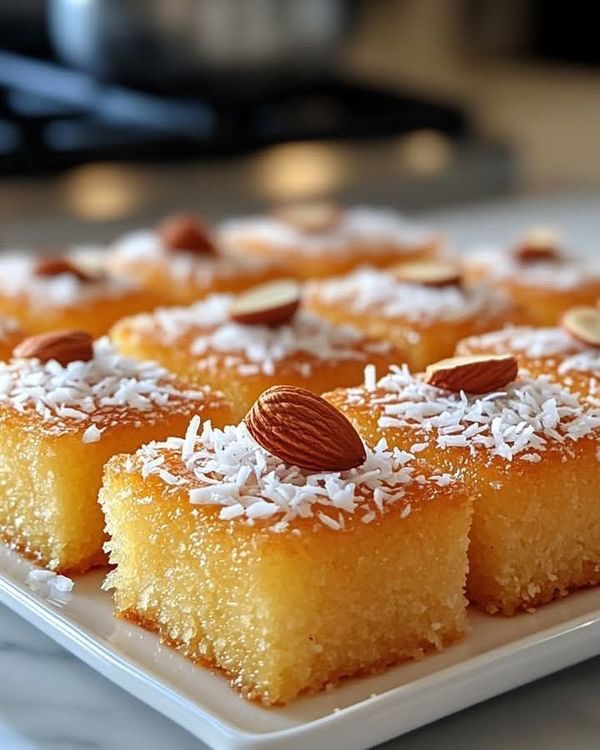
Basbousa: A Classic Semolina Cake Soaked in Sweet Syrup
Introduction
Basbousa is a beloved dessert across many parts of the Middle East and North Africa, known for its rich texture, delicate sweetness, and signature syrup-soaked finish. This semolina-based cake is both simple and elegant, offering a unique balance between grainy tenderness and moist indulgence. Whether served during festive occasions, family gatherings, or as an everyday treat with tea or coffee, basbousa has earned its place as a timeless classic.
What makes basbousa so special is its combination of humble ingredients and traditional technique. The coarse texture of semolina gives the cake its characteristic bite, while the addition of coconut enhances both flavor and aroma. Once baked to a golden perfection, the cake is soaked in a fragrant sugar syrup infused with lemon, creating a dessert that is moist, flavorful, and deeply satisfying.
In this comprehensive guide, you will learn everything you need to know about preparing basbousa from scratch. From understanding the ingredients to mastering the baking process and achieving the perfect syrup consistency, this recipe will help you create a version that is both authentic and delicious.
Ingredients
For the Basbousa Batter
- 2 cups semolina
- 1 cup granulated sugar
- 1 cup milk
- 1/2 cup unsalted butter, melted
- 1 cup shredded coconut
- 1 teaspoon baking powder
- 1 teaspoon vanilla extract
- 1/4 teaspoon salt
For Decoration
- Whole almonds (blanched or raw, depending on preference)
For the Sugar Syrup
- 1 1/2 cups sugar
- 1 cup water
- 1 tablespoon lemon juice
Understanding the Ingredients
Semolina
Semolina is the key ingredient in basbousa and defines its texture. Unlike regular flour, semolina is coarser and gives the cake its signature crumbly yet tender consistency. It absorbs liquid slowly, which contributes to the cake’s moist interior once soaked in syrup.
Sugar
Sugar is used both in the batter and in the syrup. In the batter, it provides sweetness and helps create a soft texture. In the syrup, it transforms into a glossy, sweet liquid that soaks into the cake after baking.
Milk
Milk adds moisture and helps bind the ingredients together. It also softens the semolina, allowing it to swell and create a cohesive batter.
Butter
Melted butter adds richness and enhances the flavor of the cake. It also contributes to a soft and tender crumb.
Shredded Coconut
Coconut is a traditional addition that brings a subtle sweetness and a pleasant texture. It complements the semolina and enhances the overall flavor profile.
Baking Powder
Baking powder helps the cake rise slightly, preventing it from becoming too dense. It creates a lightness that balances the otherwise rich ingredients.
Vanilla Extract
Vanilla adds depth and warmth to the flavor, making the cake more aromatic and appealing.
Salt
A small amount of salt enhances the sweetness and balances the overall flavor.
Almonds
Almonds are typically placed on top of the batter before baking. They add a decorative touch and provide a slight crunch that contrasts with the soft cake.
Sugar Syrup
The syrup is essential to basbousa. Made from sugar, water, and lemon juice, it is poured over the hot cake, allowing it to soak in and create a moist, sweet finish. The lemon juice prevents crystallization and adds a subtle tang that balances the sweetness.
Equipment Needed
- Mixing bowls
- Measuring cups and spoons
- Whisk or spatula
- Baking dish (preferably rectangular or square)
- Saucepan
- Knife
- Cooling rack
Preparation
Before starting, prepare all your ingredients. Measure everything accurately and ensure the butter is melted and slightly cooled. Preheat your oven to 180°C (350°F) and lightly grease your baking dish.
Making the Batter
In a large mixing bowl, combine the semolina, sugar, shredded coconut, baking powder, and salt. Mix well to distribute the dry ingredients evenly.
Add the milk, melted butter, and vanilla extract to the dry mixture. Stir gently until all ingredients are fully incorporated. The batter will be thick and slightly grainy, which is normal due to the semolina.
Allow the mixture to rest for about 10 to 15 minutes. This resting period is important because it allows the semolina to absorb the liquid, resulting in a better texture after baking.
Preparing the Baking Dish
Pour the batter into the prepared baking dish and spread it evenly using a spatula. Smooth the surface to ensure even baking.
Using a knife, lightly score the surface into squares or diamond shapes. This step not only guides the final cutting but also helps the syrup penetrate the cake more effectively.
Place an almond in the center of each piece for decoration.
Baking the Basbousa
Place the baking dish in the preheated oven and bake for approximately 30 to 40 minutes, or until the top is golden brown.
The edges should be slightly crisp, while the center remains soft. A golden crust is essential for both flavor and texture, as it contrasts with the moist interior.
Preparing the Sugar Syrup
While the cake is baking, prepare the syrup. In a saucepan, combine the sugar and water. Heat over medium heat, stirring until the sugar dissolves completely.
Bring the mixture to a gentle boil, then add the lemon juice. Allow it to simmer for about 10 minutes until it thickens slightly.
Remove from heat and let it cool slightly. The syrup should be warm but not hot when poured over the cake.
Soaking the Cake
Once the basbousa is removed from the oven, immediately pour the prepared syrup evenly over the hot cake.
You will hear a gentle sizzling sound as the syrup is absorbed. This step is crucial, as it ensures the cake becomes moist and flavorful.
Allow the cake to rest for at least 30 minutes before serving. This gives the syrup enough time to fully soak into the semolina.
Texture and Flavor Profile
Basbousa is known for its unique texture. The semolina creates a slightly coarse crumb that is both tender and satisfying. The syrup adds moisture and sweetness, while the coconut provides a subtle chewiness.
The flavor is rich yet balanced, with sweetness from the syrup, nuttiness from the semolina, and a hint of brightness from the lemon juice.
Tips for Success
- Use coarse semolina for the best texture
- Allow the batter to rest before baking
- Do not overbake, as this can dry out the cake
- Pour syrup over the cake while it is still hot
- Let the cake absorb the syrup fully before serving
Variations
Yogurt Basbousa
Replace part of the milk with yogurt for a slightly tangy flavor and softer texture.
Cream-Filled Basbousa
Add a layer of cream filling in the center for a richer dessert.
Orange Blossom Version
Infuse the syrup with orange blossom water for a floral aroma.
Chocolate Twist
Drizzle melted chocolate over the finished cake for a modern variation.
Storage
Basbousa can be stored at room temperature in an airtight container for up to three days. It can also be refrigerated for longer storage, though it is best enjoyed at room temperature.
Serving Suggestions
Serve basbousa with tea, coffee, or even a glass of milk. It can be enjoyed as a dessert or a sweet snack at any time of the day.
Cultural Significance
Basbousa holds a special place in many cultures and is known by different names depending on the region. It is often prepared during celebrations, religious holidays, and family gatherings. Its simplicity and rich flavor make it a symbol of hospitality and tradition.
Conclusion
Basbousa is a dessert that beautifully combines simplicity and indulgence. With its moist texture, sweet syrup, and delicate flavor, it remains a favorite across generations. By following this guide, you can create a traditional basbousa that captures the essence of this classic treat.
Whether you are making it for a special occasion or simply to enjoy at home, basbousa is a recipe that never fails to delight.