
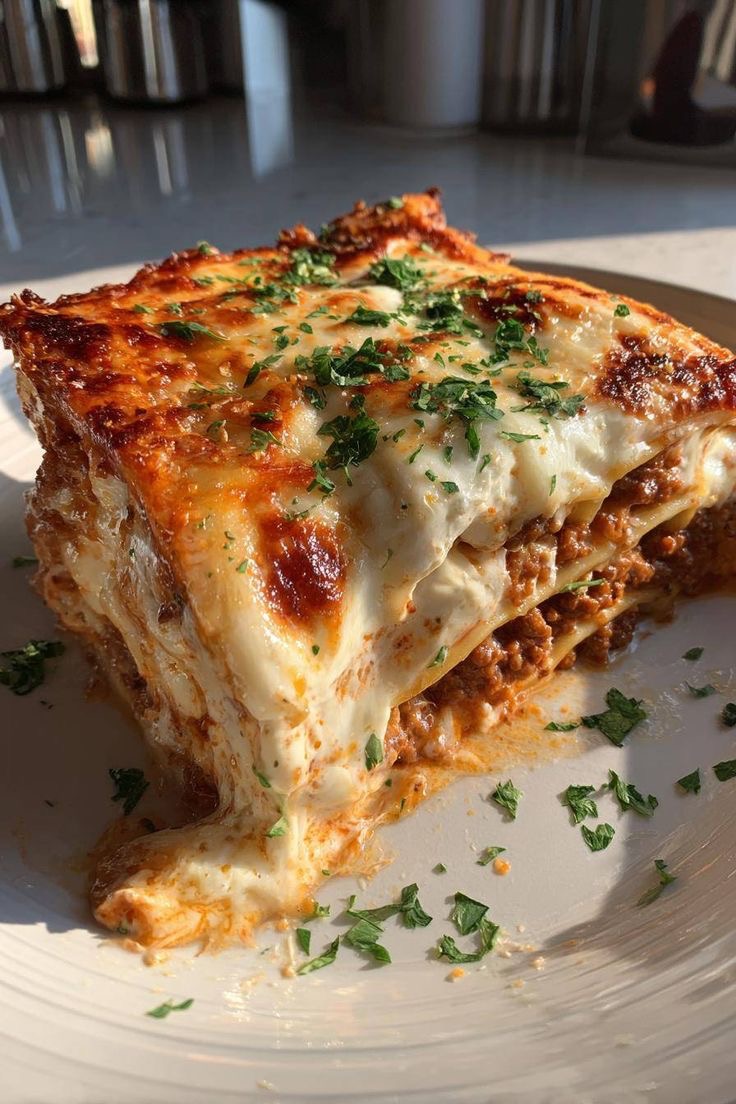
Classic Beef Lasagna
Classic Beef Lasagna is one of the most beloved comfort foods in the world. With layers of tender pasta, rich meat sauce, creamy cheese filling, and melted mozzarella, this baked Italian dish delivers warmth, flavor, and satisfaction in every bite. Whether served for a family dinner, a holiday gathering, or meal preparation for the week, lasagna remains a timeless recipe that brings people together around the table.
The beauty of homemade lasagna lies in its layers. Each component contributes to the final dish: the savory beef sauce adds depth and richness, the creamy ricotta mixture balances the flavors, and the bubbling cheese topping creates a golden crust that makes lasagna irresistible straight from the oven.
Although lasagna may look impressive, it is surprisingly manageable to prepare at home. With patience and the right ingredients, anyone can create a restaurant-quality lasagna with authentic flavor and a perfectly layered texture.
This recipe explores everything you need to know about making Classic Beef Lasagna, from selecting ingredients and preparing the meat sauce to assembling the layers and baking the perfect casserole.
What Is Lasagna?
Lasagna is a traditional Italian baked pasta dish made by layering wide sheets of pasta with sauces, cheese, and various fillings. The most famous version includes a hearty meat sauce and creamy cheese mixture baked until bubbling and golden.
Originating from Italy, lasagna has become popular worldwide because of its comforting flavor and versatility. Different regions and families have their own variations, but the classic beef version remains one of the most iconic.
Traditional lasagna combines several important elements:
- Rich tomato-based meat sauce
- Tender pasta sheets
- Creamy ricotta or béchamel
- Melted mozzarella cheese
- Parmesan for depth and flavor
- Herbs and seasonings
When baked together, these layers create a balanced dish with savory, creamy, cheesy, and hearty textures in every serving.
Ingredients
For the Meat Sauce
- 2 pounds ground beef
- 1 large onion, diced
- 4 cloves garlic, minced
- 2 tablespoons olive oil
- 1 large can crushed tomatoes
- 1 can tomato sauce
- 2 tablespoons tomato paste
- 1 teaspoon salt
- 1 teaspoon black pepper
- 1 teaspoon Italian seasoning
- 1 teaspoon dried oregano
- 1/2 teaspoon red pepper flakes
- Fresh basil, chopped
- Fresh parsley, chopped
For the Cheese Filling
- 2 cups ricotta cheese
- 1 large egg
- 1 cup grated Parmesan cheese
- 2 tablespoons chopped parsley
- Pinch of salt
- Pinch of black pepper
For Assembly
- 12 lasagna noodles
- 4 cups shredded mozzarella cheese
- Butter or cooking spray for greasing the baking dish
Equipment Needed
To prepare homemade lasagna efficiently, gather the following kitchen tools:
- Large skillet or saucepan
- Large pot for boiling pasta
- Mixing bowls
- Wooden spoon
- 9×13-inch baking dish
- Aluminum foil
- Knife and cutting board
- Ladle or spoon for layering
Why Homemade Lasagna Is Worth It
Store-bought frozen lasagna can never compare to the flavor and texture of homemade lasagna. Making it from scratch allows you to:
- Control ingredient quality
- Adjust seasoning to your taste
- Use fresh herbs and cheeses
- Create richer flavor
- Customize layers and fillings
- Serve freshly baked comfort food
Homemade lasagna also fills the kitchen with an incredible aroma that instantly creates a cozy atmosphere.
Preparing the Meat Sauce
The meat sauce is the heart of classic beef lasagna. A well-made sauce creates deep flavor and moisture throughout the dish.
Start by heating olive oil in a large skillet over medium heat. Add the diced onions and cook until soft and translucent. Stir in the garlic and cook briefly until fragrant.
Add the ground beef and cook until browned, breaking it apart with a spoon as it cooks. Drain excess grease if necessary.
Stir in the tomato paste and cook for a minute to deepen the flavor. Add crushed tomatoes and tomato sauce, then season with salt, black pepper, oregano, Italian seasoning, and red pepper flakes.
Allow the sauce to simmer gently for at least 30 to 45 minutes. Slow simmering helps the flavors blend and creates a rich, thick consistency.
Finish with fresh basil and parsley for brightness and freshness.
A properly simmered sauce should be thick enough to coat a spoon without becoming watery.
Cooking the Lasagna Noodles
Bring a large pot of salted water to a boil and cook the lasagna noodles according to package instructions until al dente.
Avoid overcooking the pasta, as it will continue softening during baking.
After cooking, drain the noodles and lay them flat on parchment paper or lightly oiled baking sheets to prevent sticking.
Some recipes use oven-ready noodles, but boiled noodles often produce a softer and more traditional texture.
Making the Cheese Filling
In a large bowl, combine ricotta cheese, egg, Parmesan cheese, parsley, salt, and black pepper.
Mix until smooth and evenly combined.
The egg helps bind the filling while baking, creating creamy but stable layers inside the lasagna.
Some variations include mozzarella in the filling mixture, but traditional versions often reserve mozzarella for layering and topping.
Assembling the Lasagna
Assembly is one of the most satisfying parts of the process.
Begin by lightly greasing a baking dish. Spread a thin layer of meat sauce on the bottom to prevent sticking.
Add a layer of lasagna noodles, slightly overlapping if necessary.
Spread part of the ricotta mixture over the noodles, followed by meat sauce and shredded mozzarella cheese.
Repeat the layers:
- Sauce
- Noodles
- Ricotta mixture
- Meat sauce
- Mozzarella
Continue until all ingredients are used, finishing with sauce and a generous layer of mozzarella and Parmesan cheese on top.
The top layer becomes beautifully golden and bubbly during baking.
Baking the Lasagna
Preheat the oven to 375°F (190°C).
Cover the baking dish with aluminum foil and bake for about 30 to 40 minutes.
Remove the foil during the final 15 to 20 minutes so the cheese can brown and bubble.
The lasagna is ready when the edges are bubbling and the top is golden brown.
Allow the lasagna to rest for at least 15 minutes before slicing. Resting helps the layers set and makes serving easier.
Texture and Flavor
A great beef lasagna should have:
- Tender but structured pasta layers
- Thick and flavorful meat sauce
- Creamy cheese filling
- Melted stretchy mozzarella
- Balanced seasoning
- Rich but not greasy texture
Every bite should contain all the layers working together harmoniously.
Tips for Perfect Lasagna
Simmer the Sauce Slowly
A longer simmer creates richer flavor and thicker consistency.
Avoid Watery Lasagna
Drain excess grease and avoid overly thin sauce.
Use Freshly Shredded Cheese
Fresh cheese melts more smoothly than pre-shredded packaged cheese.
Let It Rest
Cutting immediately after baking can cause messy slices.
Season Every Layer
Proper seasoning throughout the dish creates balanced flavor.
Common Mistakes to Avoid
Overcooking the Pasta
Soft noodles can become mushy after baking.
Using Too Much Sauce
Excess liquid can make the lasagna watery.
Skipping Rest Time
The layers need time to settle before slicing.
Underseasoning
Lasagna requires enough herbs and salt for full flavor.
Uneven Layers
Balanced layers ensure consistent texture and flavor.
Best Cheese Combinations
Cheese is one of the defining features of lasagna.
Ricotta Cheese
Provides creaminess and traditional texture.
Mozzarella Cheese
Creates stretchy melted layers and golden topping.
Parmesan Cheese
Adds sharpness and savory depth.
Optional Additions
- Provolone
- Romano
- Fontina
- Asiago
Combining cheeses creates more complex flavor.
Variations of Beef Lasagna
Spicy Lasagna
Add extra chili flakes or spicy sausage.
Vegetable Lasagna
Include spinach, zucchini, mushrooms, or eggplant.
White Lasagna
Replace tomato sauce with creamy béchamel sauce.
Four Cheese Lasagna
Use a blend of ricotta, mozzarella, Parmesan, and provolone.
Garlic Butter Lasagna
Add garlic butter between layers for extra richness.
Serving Suggestions
Classic Beef Lasagna pairs beautifully with many side dishes.
Garlic Bread
Crunchy garlic bread complements the creamy texture.
Caesar Salad
Fresh salad balances the richness.
Roasted Vegetables
Serve with roasted broccoli, carrots, or asparagus.
Soup
Pair with tomato soup or Italian wedding soup.
Red Wine
Rich red wines pair especially well with beef lasagna.
Storing Leftovers
Lasagna stores exceptionally well and often tastes even better the next day.
Refrigerator
Store covered for up to 4 days.
Freezer
Freeze individual portions or the entire dish for up to 3 months.
Reheating
Reheat in the oven for best texture or microwave individual slices.
Making Lasagna Ahead of Time
Lasagna is perfect for preparing in advance.
You can assemble the dish a day before baking and refrigerate it overnight.
This allows the flavors to blend together even more deeply.
Before baking, let the dish sit at room temperature briefly while the oven preheats.
Why Lasagna Is Perfect for Gatherings
Lasagna is ideal for feeding groups because it:
- Serves many people
- Can be prepared ahead
- Reheats beautifully
- Feels comforting and hearty
- Looks impressive when served
It is often a centerpiece dish for holidays, birthdays, and family dinners.
The Importance of Layering
Proper layering ensures that each bite contains balanced flavor and texture.
Thin, even layers prevent the dish from collapsing while keeping it moist and cohesive.
Layering also helps distribute sauce and cheese evenly throughout the casserole.
Nutritional Information
Approximate values per serving:
- Calories: 550
- Protein: 35g
- Carbohydrates: 40g
- Fat: 28g
- Fiber: 4g
- Sugar: 8g
Values may vary depending on ingredients and portion sizes.
Frequently Asked Questions
Can I Use Cottage Cheese Instead of Ricotta?
Yes, although ricotta provides a smoother and more traditional texture.
Can I Freeze Unbaked Lasagna?
Absolutely. Wrap tightly and freeze before baking.
Why Is My Lasagna Falling Apart?
It may need more resting time or thicker sauce.
Can I Use No-Boil Noodles?
Yes, but ensure enough moisture in the sauce.
How Long Does Lasagna Last?
Properly stored lasagna lasts several days in the refrigerator.
The History of Lasagna
Lasagna has deep roots in Italian culinary history. Variations of layered pasta dishes have existed for centuries, evolving over time into the modern baked casserole enjoyed worldwide today.
Traditional Italian lasagna differs by region. Northern Italy often uses béchamel sauce, while southern versions rely more heavily on tomato-based meat sauces.
The American-style beef lasagna became especially popular for its hearty portions, rich cheese layers, and comforting flavor.
Why People Love Beef Lasagna
Classic Beef Lasagna remains popular because it combines multiple comforting elements in one dish.
People love it for its:
- Rich savory flavor
- Creamy cheese layers
- Filling texture
- Golden bubbly topping
- Homemade warmth
It is a meal associated with family dinners, celebrations, and comfort.
Final Thoughts
Classic Beef Lasagna is more than just a pasta dish. It is a comforting, layered meal that combines rich flavors, creamy textures, and satisfying ingredients into one unforgettable recipe.
From the slow-simmered beef sauce to the bubbling cheese topping, every part of homemade lasagna contributes to its timeless appeal. While it takes some effort to prepare, the final result is always rewarding and well worth the time.
Whether served for a cozy family dinner, a holiday celebration, or meal prep for the week, homemade lasagna delivers warmth and satisfaction in every slice.
Once you master the process of building perfect layers and balancing flavors, this classic recipe quickly becomes a favorite that you will return to again and again.