
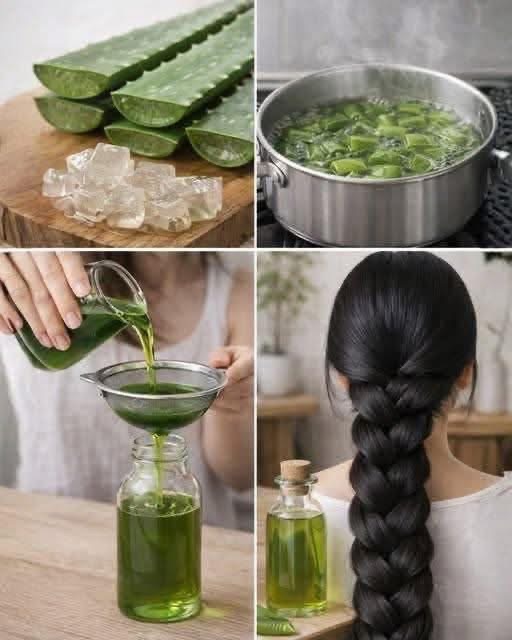
If your hair feels dry, rough, or difficult to manage, you don’t always need a complicated collection of products. A simple homemade hair oil made with aloe vera and a nourishing carrier oil can be a lovely addition to a hair-care routine.
Aloe vera is well known for its soothing and moisturizing properties, while oils can help reduce dryness and improve the feel and appearance of the hair.
But there’s one important distinction: aloe vera hair oil isn’t a proven treatment for hair loss or baldness. It can support the feel and condition of the hair and scalp, but persistent hair loss has many possible causes and may need professional evaluation.
🌿 Why Combine Aloe Vera With Hair Oil?
Aloe vera contains water and various plant compounds, while oils help coat the hair and reduce moisture loss.
Together, they can create a simple conditioning treatment.
Potential benefits include:
- Helping dry hair feel softer
- Improving manageability
- Adding shine
- Helping reduce the feeling of roughness
- Providing a soothing scalp-care ritual
- Making hair easier to detangle
The results can vary depending on your hair type and the ingredients you use.
🧴 Homemade Aloe Vera Hair Oil Recipe
Ingredients
- 2 tablespoons pure aloe vera gel
- ½ cup coconut oil, olive oil, or another suitable carrier oil
Instructions
- If using fresh aloe vera, wash the leaf thoroughly.
- Remove the outer green skin and rinse away the yellow latex underneath.
- Collect the clear inner gel.
- Blend the gel until smooth.
- Combine it with your chosen carrier oil.
- Warm the mixture very gently over low heat while stirring.
- Allow it to cool completely.
- Transfer it to a clean, dry container.
Important: Fresh aloe vera contains water, so an oil-and-fresh-aloe mixture can spoil or develop microbial contamination. For a homemade preparation, make only a small amount, keep it refrigerated, and use it quickly. A commercially prepared, cosmetic-grade aloe product with a proper preservative system is safer for longer storage.
💆 How to Use It
Apply a small amount to your scalp and hair.
Massage the scalp gently with your fingertips for several minutes.
Don’t scratch or aggressively rub the scalp.
Leave it on for around 20–30 minutes, then shampoo thoroughly.
If your hair is particularly dry, you can concentrate the oil on the lengths and ends rather than applying a large amount directly to the scalp.
How Often Should You Use It?
Start with once a week.
If your scalp and hair tolerate it well, you can adjust your routine according to how your hair feels.
More oil doesn’t necessarily mean better results. Using too much can leave the hair greasy and may be difficult to wash out.
🌱 Can Aloe Vera Make Hair Grow Faster?
This is one of the biggest claims you’ll see online.
Aloe vera is sometimes advertised as a natural hair-growth treatment, but there isn’t strong clinical evidence that homemade aloe vera hair oil can significantly accelerate hair growth or reverse baldness.
Hair growth is influenced by genetics, hormones, nutrition, age, medical conditions, medications, and scalp health.
If you’re experiencing significant or sudden hair loss, it’s better to determine the cause rather than relying exclusively on a homemade treatment.
⚠️ Patch Test First
Natural doesn’t automatically mean irritation-free.
Aloe vera and other botanical ingredients can cause skin reactions in some people.
Before applying the mixture extensively, test a small amount on a limited area of skin.
Stop using it if you experience:
- Burning
- Itching
- Redness
- Rash
- Swelling
- Increased scalp irritation
Avoid applying it to broken or irritated skin.
Final Thoughts
Homemade aloe vera hair oil can be a simple, relaxing addition to your hair-care routine. It may help dry hair feel softer, smoother, and more manageable, particularly when combined with a suitable carrier oil.
Just don’t expect one homemade mixture to magically regrow hair overnight.
Healthy-looking hair comes from consistent care: gentle washing, avoiding excessive heat and chemical damage, adequate nutrition, and taking care of the scalp.