
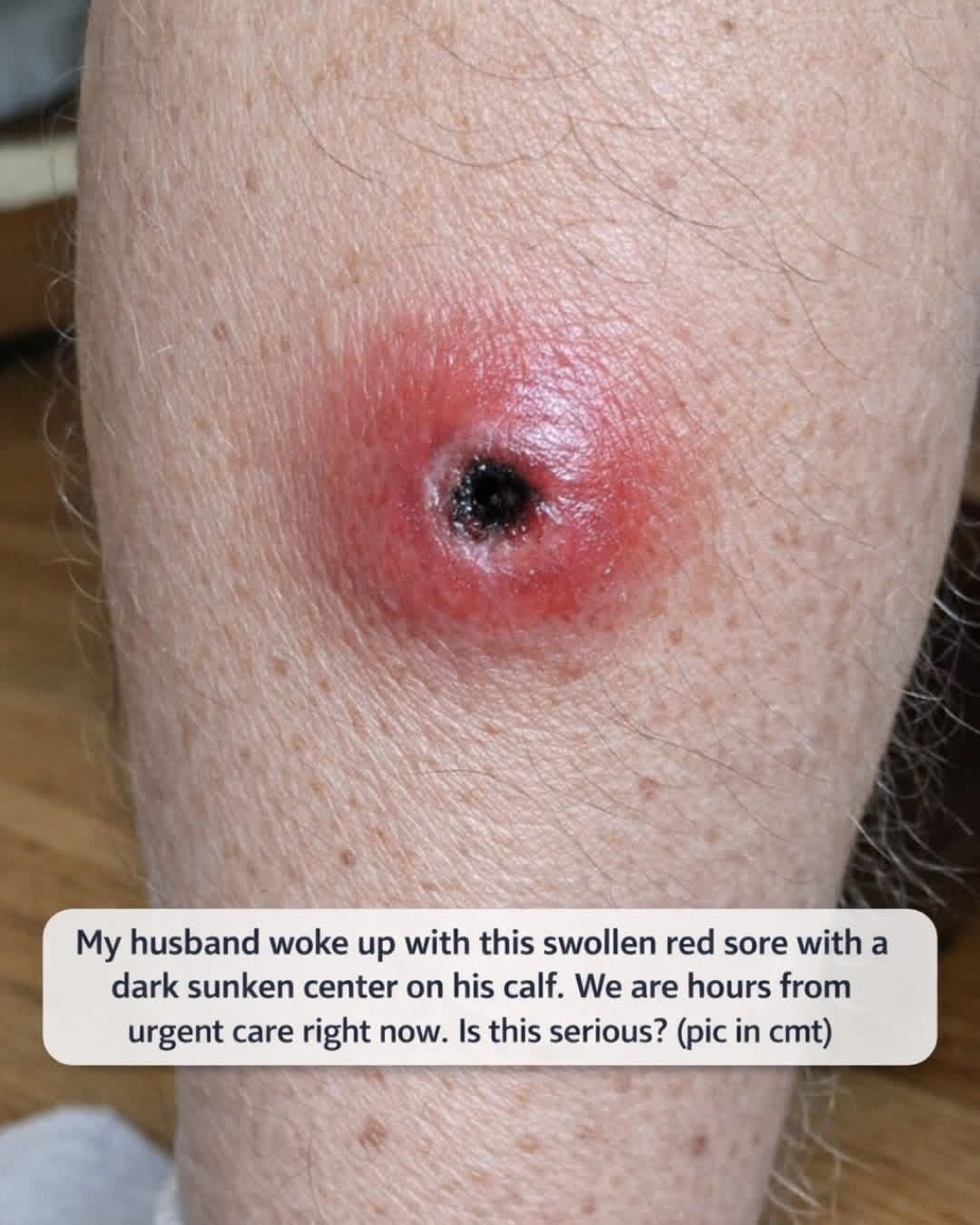
A small skin lesion can sometimes look harmless at first, but when an area becomes red, swollen, painful, and develops a dark or black center, it deserves attention.
The image above shows a raised, inflamed area on the calf with significant surrounding redness and a dark central spot. Although it is impossible to determine the exact cause from a photograph alone, this type of lesion can occur with several different conditions, including an infected insect bite, skin abscess, bacterial skin infection, infected wound, or another inflammatory skin problem.
In some situations, a dark center can represent a scab or damaged tissue. That does not automatically mean something dangerous, but when it appears together with increasing redness, swelling, warmth, pain, drainage, or systemic symptoms, medical evaluation becomes particularly important.
What Is a Skin Lesion With a Dark Center?
A dark center can develop for different reasons.
Sometimes it is simply dried blood or a crust that forms as the skin heals. In other situations, the center may represent tissue damage, a small area of skin breakdown, or material associated with an infection.
The surrounding redness is often more important than the color of the center alone.
A bacterial skin infection such as cellulitis can cause redness, swelling, warmth, tenderness, and pain. Cellulitis commonly affects the lower legs and can develop when bacteria enter through a small cut, puncture, bite, sore, or other break in the skin.
An abscess is another possibility. An abscess is a collection of pus beneath the skin and can produce a painful, swollen lump. Sometimes it eventually drains on its own, but other abscesses require medical treatment.
Could It Be an Insect Bite?
Yes, an insect bite is one possible explanation, especially if the lesion appeared suddenly.
Many ordinary insect bites cause a small, red, swollen, itchy or painful bump and improve within several days. However, a bite can become infected, particularly if it is scratched and the skin becomes broken.
Signs that a bite may have become infected include:
• Increasing redness
• Increasing swelling
• Increasing pain
• Warmth around the area
• Pus or fluid
• A worsening rather than improving appearance
• Fever or feeling unwell
These symptoms should prompt medical advice.
It is also important not to assume that every unusual-looking lesion is a spider bite. People sometimes describe unexplained skin infections as “spider bites” even when the actual cause is different.
Could It Be Cellulitis?
Cellulitis is a bacterial infection involving the skin and tissues underneath it.
It commonly causes:
• Redness
• Swelling
• Warmth
• Tenderness
• Pain
• Sometimes fever or chills
The affected area can expand over time. Because cellulitis can spread to deeper tissues or the bloodstream when severe or untreated, early medical assessment is important.
A person with a growing, swollen, red area should not simply wait several days to see what happens, particularly if the symptoms are getting worse.
What About the Black Center?
The dark center is one of the features that makes this type of lesion worth having assessed.
A black spot can have relatively harmless explanations, such as a scab or dried blood. However, dark, purple, or gray areas can sometimes occur when tissue is significantly damaged.
That is why the whole picture matters:
Is the redness spreading?
Is the pain becoming severe?
Is the area hot?
Is there pus?
Is the swelling increasing?
Is the person developing fever, chills, dizziness, weakness, confusion, or other symptoms?
A healthcare professional can examine the lesion and determine whether it appears to be a simple wound, bite, abscess, cellulitis, or something requiring more urgent treatment.
When Should You Seek Medical Care?
A painful, swollen, red lesion that is growing should generally be evaluated by a healthcare professional, especially if there is no obvious explanation.
Mayo Clinic advises medical assessment within 24 hours for a swollen or growing rash even without fever, while emergency care is recommended when a swollen rash is changing rapidly or is accompanied by fever.
Seek urgent medical attention if there is:
• Rapidly spreading redness or swelling
• Increasing or severe pain
• Fever or chills
• Pus or significant drainage
• Red streaks extending away from the lesion
• Increasing warmth around the area
• Significant swelling
• Blisters
• Black, purple, or gray areas that are developing or expanding
• Feeling faint, confused, extremely weak, or very unwell
A rare but extremely serious infection called necrotizing fasciitis can cause rapidly worsening pain, redness and swelling, followed by blisters or black, purple, or gray skin changes. It requires immediate hospital treatment.
This condition is rare, so seeing a dark spot does not mean someone has necrotizing fasciitis. The warning signs are the combination of rapidly worsening symptoms, severe pain, systemic illness, and concerning skin changes.
What Should You Do While Waiting to Be Seen?
If medical care is not immediately available and the person is otherwise stable, keep the area clean and avoid manipulating it.
You can:
1. Gently clean the surrounding area with soap and water.
2. Keep the lesion covered with a clean dressing if the skin is open or draining.
3. Avoid scratching or squeezing it.
4. Avoid trying to cut, drain, or puncture the lesion yourself.
5. Keep the affected leg elevated if it is swollen.
6. Take a photograph and, if appropriate, mark the edge of the redness with a pen so you can see whether it is spreading.
For minor wounds, keeping the area clean and covered helps reduce the risk of infection. Increasing pain, swelling, warmth, pus, fever, or spreading redness are reasons to seek medical attention.
Don’t Rely on Home Remedies
A common mistake is to experiment with strong household substances, chemicals, or unproven remedies when a lesion looks infected.
Do not burn, cut, puncture, or aggressively squeeze the area.
Do not apply irritating substances simply because someone online recommends them.
If the problem is an abscess or bacterial infection, the appropriate treatment may require professional evaluation and, depending on the diagnosis, antibiotics or drainage.
People Who Should Be Especially Careful
Some people have a higher risk of complications from skin infections.
Extra caution is appropriate for people with:
• Diabetes
• Poor circulation
• A weakened immune system
• Chronic swelling of the legs
• Previous episodes of cellulitis
• Conditions that make it difficult to feel injuries
These factors can make it easier for an infection to become more serious or harder to recognize early.
What a Doctor May Look For
During an examination, a healthcare professional may ask:
• When did the lesion first appear?
• Did it begin after a bite, cut, injection, or injury?
• Has the redness been spreading?
• Is it painful, itchy, or both?
• Is there drainage or pus?
• Has the person had a fever?
• Has the person experienced chills or weakness?
• Are there other lesions elsewhere?
• Does the person have diabetes or another condition affecting immunity or circulation?
The clinician may examine the area closely and determine whether additional testing, antibiotics, drainage, or another treatment is necessary. Cellulitis is often diagnosed clinically, although additional tests may sometimes be needed to rule out other problems.
The Most Important Takeaway
A red, swollen lesion with a dark center should not automatically be diagnosed from a photograph.
It could be something relatively minor, such as an irritated bite or scab, but it could also represent an abscess or bacterial skin infection that needs treatment.
The most concerning signs are rapid progression, severe or disproportionate pain, fever or chills, spreading redness, significant drainage, blisters, or new black/purple/gray skin changes.
If any of these symptoms are present, don’t wait for the lesion to “see what happens.” Seek appropriate medical care promptly.
Final Reminder
Photos can be useful for documenting changes, but they cannot replace an examination by a healthcare professional.
If a lesion is becoming larger, redder, hotter, more swollen, or more painful—or if the person feels sick—it’s safest to get it evaluated rather than attempting to diagnose or treat it at home.