
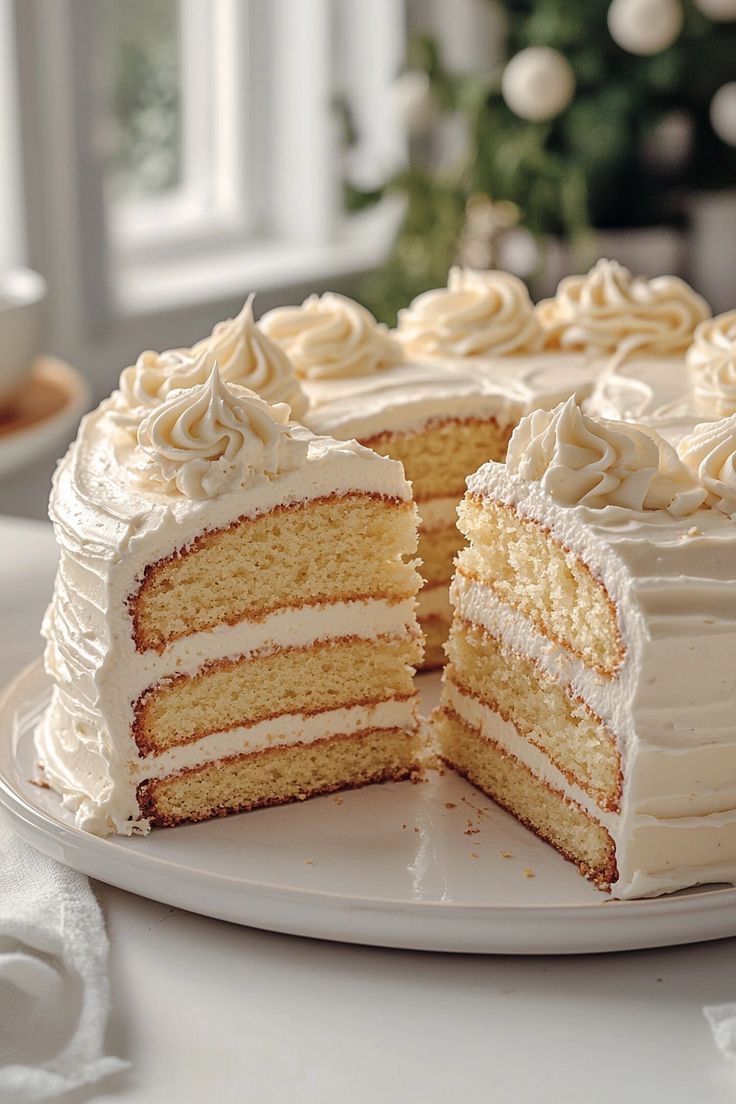
Classic Vanilla Layer Cake (Ultimate Bakery-Style Recipe Guide)
A Classic Vanilla Layer Cake is one of the most iconic desserts in baking. It is soft, fluffy, rich in vanilla flavor, and perfectly balanced between sweetness and lightness. With its elegant layers and smooth frosting, it is a cake that fits every occasion—from birthdays and weddings to casual family gatherings.
This complete guide explains how to create a perfect vanilla layer cake from scratch, including ingredient functions, mixing techniques, baking methods, frosting preparation, assembly tips, troubleshooting, variations, storage, and professional baking secrets.
Introduction to Classic Vanilla Layer Cake
Vanilla layer cake is considered the foundation of all celebration cakes. Its simplicity allows bakers to focus on texture, structure, and flavor balance. When done correctly, it produces:
- Soft and airy cake layers
- Moist crumb without being heavy
- Rich buttery vanilla flavor
- Smooth, creamy frosting
- Elegant stacked presentation
Unlike single-layer cakes, a layer cake requires precision in baking and assembly. Each layer must be even, stable, and consistent in texture to ensure a professional finish.
Ingredients and Their Roles
Understanding each ingredient is essential for success.
All-purpose flour
Flour provides structure and stability. It forms the base of the cake layers. Proper measurement is important to avoid dryness or density.
Sugar
Sugar sweetens the cake and helps create moisture. It also contributes to a soft texture when creamed with butter.
Eggs
Eggs bind the ingredients and add richness. They help create structure while keeping the cake tender.
Butter
Butter adds flavor, richness, and softness. It is essential for creating a light and creamy batter.
Milk
Milk provides moisture and helps achieve a smooth batter consistency.
Vanilla extract
Vanilla is the main flavor component. High-quality vanilla gives depth and warmth.
Baking powder
Baking powder helps the cake rise and creates a light, fluffy texture.
Salt
Salt enhances flavor and balances sweetness.
Sour cream
Sour cream adds moisture, tenderness, and slight tanginess that improves texture.
Powdered sugar (frosting)
Powdered sugar sweetens and stabilizes frosting, creating a smooth finish.
Cream cheese (optional frosting base)
Cream cheese adds richness and a slight tang, balancing sweetness.
Heavy cream (optional frosting)
Heavy cream creates a light and fluffy frosting texture when whipped.
Equipment Needed
To make a perfect vanilla layer cake, you will need:
- Two or three round cake pans (8 or 9 inches)
- Mixing bowls
- Electric mixer or whisk
- Measuring cups and spoons
- Spatula
- Cooling rack
- Cake leveler or serrated knife
- Offset spatula for frosting
Proper equipment ensures even baking and professional results.
Preparing the Cake Pans
Proper preparation prevents sticking and ensures smooth layers.
- Grease cake pans with butter or oil
- Dust lightly with flour
- Line the bottom with parchment paper
This guarantees clean removal after baking.
Step-by-Step Instructions
Step 1: Preheat oven
Preheat oven to 175°C (350°F). Proper preheating ensures even rising.
Step 2: Prepare dry ingredients
In a bowl, sift together:
- All-purpose flour
- Baking powder
- Salt
Sifting ensures even distribution and removes lumps.
Step 3: Cream butter and sugar
Beat butter and sugar together until light and fluffy. This step incorporates air, which is essential for soft cake layers.
Mix for 3–5 minutes until pale and creamy.
Step 4: Add eggs
Add eggs one at a time, mixing well after each addition. This helps maintain a stable batter.
Step 5: Add vanilla and sour cream
Mix in vanilla extract and sour cream until fully combined. This adds moisture and enhances flavor.
Step 6: Combine wet and dry ingredients
Add dry ingredients alternately with milk:
- Add flour mixture
- Add milk
- Repeat until fully combined
Mix gently to avoid overworking the batter.
Step 7: Final mixing
Use a spatula to ensure the batter is smooth and evenly combined. Do not overmix.
Step 8: Divide batter
Pour batter evenly into prepared cake pans. Smooth tops with a spatula.
Tap pans lightly to remove air bubbles.
Step 9: Bake
Bake for 25–35 minutes depending on pan size.
Cake is done when:
- A toothpick comes out clean
- Top is golden
- Cake springs back when touched
Step 10: Cooling
Let cakes cool in pans for 10–15 minutes, then transfer to cooling racks.
Cool completely before frosting.
Preparing the Frosting
Classic Vanilla Buttercream
Mix:
- Butter
- Powdered sugar
- Vanilla extract
- Milk or cream
Beat until fluffy and smooth.
Cream Cheese Frosting Option
Mix:
- Cream cheese
- Butter
- Powdered sugar
- Vanilla extract
Beat until creamy and thick.
Whipped Cream Frosting Option
Whip:
- Heavy cream
- Powdered sugar
- Vanilla extract
Until soft peaks form.
Assembling the Cake
Step 1: Level layers
Trim cake tops if needed for even stacking.
Step 2: First layer
Place first cake layer on serving plate.
Step 3: Add frosting
Spread an even layer of frosting.
Step 4: Stack layers
Add remaining cake layers carefully.
Step 5: Crumb coat
Apply a thin layer of frosting to seal crumbs. Chill for 15 minutes.
Step 6: Final frosting
Apply final smooth layer of frosting over entire cake.
Decoration Ideas
- Smooth minimalist finish
- Piped frosting borders
- Fresh berries
- Sprinkles or edible pearls
- Vanilla glaze drizzle
- Floral decorations
Baking Tips for Perfect Results
Use room temperature ingredients
Ensures smooth mixing and better texture.
Do not overmix
Overmixing leads to dense cake layers.
Measure ingredients accurately
Precision is key in baking.
Do not overbake
Overbaking dries out the cake.
Cool completely before frosting
Warm cake will melt frosting.
Common Problems and Solutions
Cake is dense
Cause: Overmixing or too much flour
Solution: Mix gently and measure accurately
Cake is dry
Cause: Overbaking
Solution: Check baking time early
Cake layers are uneven
Cause: Uneven batter distribution
Solution: Divide batter equally
Frosting is runny
Cause: Too much liquid
Solution: Add more powdered sugar
Cake breaks while assembling
Cause: Warm or fragile layers
Solution: Chill layers before stacking
Variations
1. Strawberry Vanilla Layer Cake
Add strawberry filling between layers.
2. Chocolate Swirl Vanilla Cake
Add cocoa batter for marbled effect.
3. Lemon Vanilla Cake
Add lemon zest for fresh citrus flavor.
4. Almond Vanilla Cake
Replace part of vanilla with almond extract.
5. Funfetti Vanilla Cake
Add colorful sprinkles into batter.
Storage Instructions
- Room temperature: 1–2 days
- Refrigerator: up to 5 days
- Freezer: up to 2 months (wrapped tightly)
Reheating / Serving Tips
- Serve at room temperature for best flavor
- Chill slightly for cleaner slicing
- Use a warm knife for smooth cuts
Nutritional Overview (Approximate per slice)
- Calories: High
- Fat: High (butter and frosting)
- Carbohydrates: High (flour and sugar)
- Protein: Moderate (eggs and dairy)
- Sugar: High
Best enjoyed as an occasional treat.
Final Thoughts
Classic Vanilla Layer Cake is a timeless dessert that represents the foundation of baking skills. Its beauty lies in simplicity—soft layers, balanced sweetness, and creamy frosting. While the recipe requires attention to detail, it is highly rewarding and adaptable.
With proper technique, you can create a professional-quality cake at home that looks elegant and tastes unforgettable.