
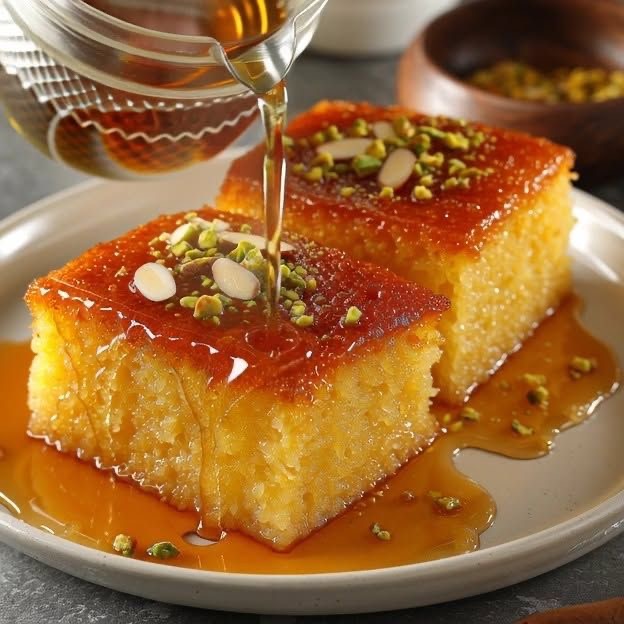
Classic Basbousa (Sweet Semolina Syrup Cake)
Introduction
Basbousa is one of the most beloved traditional desserts in Middle Eastern and Mediterranean cuisine. Known for its soft, grainy texture and rich sweetness, this semolina-based cake is soaked in fragrant sugar syrup that gives it a moist and melt-in-the-mouth quality. It is commonly enjoyed in countries such as Egypt, Lebanon, Palestine, Jordan, and across North Africa, where it is often served during family gatherings, celebrations, and religious holidays.
What makes basbousa special is its simplicity. It is made from basic pantry ingredients like semolina, sugar, yogurt, and butter, yet the result is a luxurious dessert with deep flavor and comforting texture. The addition of syrup infused with lemon or rose water elevates it into something truly memorable.
This guide will walk you through everything you need to know to prepare perfect basbousa at home, including ingredient functions, step-by-step preparation, syrup making, baking techniques, variations, storage tips, and professional advice for achieving bakery-quality results.
Ingredients
For the Basbousa Batter
- Semolina
- Sugar
- Yogurt
- Butter
- Milk
- Baking powder
- Vanilla extract
- Shredded coconut (optional but traditional in many variations)
For Decoration
- Almonds
For the Syrup
- Sugar
- Water
- Lemon juice
- Rose water (optional)
Understanding Basbousa
Basbousa is a syrup-soaked semolina cake. Unlike flour-based cakes, it uses semolina as the primary ingredient, which gives it a slightly coarse but tender texture. When baked, it forms a golden crust on top while remaining soft and moist inside.
The syrup is a key element. It is poured over the hot cake immediately after baking, allowing it to absorb the liquid and become rich and sweet without becoming soggy.
The balance between the dry cake and sweet syrup is what defines a perfect basbousa. If done correctly, every bite should be moist, slightly dense, and aromatic.
Step 1: Preparing the Syrup
The syrup should always be prepared first so it can cool while the cake is baking.
In a saucepan, combine sugar and water. Heat over medium heat, stirring until the sugar dissolves completely.
Once it begins to boil, reduce the heat and let it simmer for several minutes. The syrup should slightly thicken but remain pourable.
Add lemon juice. This prevents crystallization and balances sweetness with a slight tang.
Optionally, add rose water for a fragrant floral aroma that is commonly used in traditional versions.
Remove from heat and allow the syrup to cool completely. Cold syrup is essential for proper absorption into the hot cake.
Step 2: Preparing the Basbousa Batter
In a large mixing bowl, combine semolina and sugar. Mix well so the sugar is evenly distributed.
Add yogurt, melted butter, milk, vanilla extract, and baking powder. These ingredients work together to create moisture, richness, and softness.
If using shredded coconut, add it at this stage for extra texture and flavor.
Mix everything until a thick, uniform batter forms. The consistency should be dense but spreadable, not runny.
Allow the batter to rest for a short time. This helps the semolina absorb moisture, improving texture after baking.
Step 3: Preparing the Baking Pan
Grease a baking dish with butter to prevent sticking.
Pour the batter into the pan and spread it evenly using a spatula.
Smooth the surface to ensure even baking.
Score the top lightly into diamond or square shapes before baking. This helps with even slicing later.
Place an almond in the center of each section for traditional decoration.
Step 4: Baking the Basbousa
Preheat the oven to a moderate temperature.
Place the pan in the oven and bake until the top becomes golden brown and the edges slightly pull away from the sides.
The cake should have a firm, golden surface while remaining soft inside.
Avoid overbaking, as this can make the basbousa dry and less absorbent for syrup.
Step 5: Adding the Syrup
Once the basbousa is baked, remove it from the oven while still hot.
Immediately pour the cooled syrup evenly over the hot cake.
It is important that the cake is hot and the syrup is cold for proper absorption.
Allow the cake to rest so it fully absorbs the syrup.
During this time, the semolina will soak up the liquid, becoming moist, rich, and flavorful.
Texture and Flavor Profile
A perfect basbousa should have:
A golden, slightly crisp top layer
A soft, moist, and slightly grainy interior
A rich sweetness balanced by lemon syrup
A subtle aroma of vanilla or rose water
A nutty crunch from almonds
The texture should be dense but tender, not dry or overly soggy.
Tips for Perfect Basbousa
Use fine or medium semolina for best texture.
Do not overmix the batter, as this can make the cake dense.
Always pour cold syrup over hot cake for proper absorption.
Let the cake rest after adding syrup before serving.
Use fresh yogurt for better flavor and moisture.
Do not skip resting time before baking.
Common Mistakes to Avoid
Using hot syrup on hot cake, which prevents proper absorption.
Overbaking, leading to dryness.
Adding too much liquid to the batter, resulting in a weak structure.
Skipping resting time for semolina hydration.
Cutting the cake before syrup is fully absorbed.
Variations
Coconut Basbousa
Increase shredded coconut for a stronger tropical flavor.
Cream-Filled Basbousa
Add a layer of cream in the middle before baking.
Orange Basbousa
Replace rose water with orange blossom water or orange zest.
Nutty Basbousa
Add pistachios or walnuts for extra crunch.
Low-Sugar Version
Reduce sugar in both batter and syrup for a lighter dessert.
Storage and Serving
Basbousa stores very well and often tastes better the next day.
Keep it in an airtight container at room temperature for up to three days.
It can also be refrigerated for up to a week.
Serve at room temperature for best texture and flavor.
Basbousa is traditionally served in small diamond or square pieces.
Serving Suggestions
Basbousa pairs beautifully with:
Tea
Coffee
Mint tea
Cardamom drinks
Light desserts like fruit salads
Its sweetness makes it ideal for pairing with slightly bitter or aromatic beverages.
Cultural Significance
Basbousa is more than just a dessert; it is a symbol of hospitality and celebration in many cultures. It is commonly served during Ramadan, Eid, weddings, and family gatherings.
Each region has its own variation, from coconut-rich Egyptian versions to rose-scented Levantine styles. Despite these differences, the essence remains the same: a simple semolina cake soaked in sweet syrup.
Conclusion
Classic basbousa is a timeless dessert that combines simplicity with rich flavor. Its soft semolina texture, fragrant syrup, and delicate sweetness make it a favorite across generations and cultures.
Although it uses basic ingredients, the technique is important. Proper mixing, correct baking, and precise syrup application are what transform it from a simple cake into a traditional delicacy.
With practice, anyone can master basbousa and adapt it to personal taste while preserving its authentic charm.